

How To Install Abutment Clips
Service
7 Brake Hardware Items Not to Be Neglected
Abutment Clips
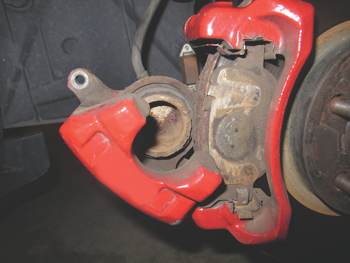
Abutment clips reside on the caliper bracket lands on near vehicles. They create a uniform surface for the pads to make contact with. Some abutment clips include fingers that concur the pad in place. These are consumable components in a restriction system, not only because of rust and vesture, but considering the anti-rattle features can fatigue over fourth dimension.
Click Here to Read More
Abutment clips need to be replaced with the brake pads. Oestrus and cooling cycles tin can weaken springs and clips causing dissonance.
New abutment clips are being used on some new vehicles that assistance to push the pads back from the rotor to reduce drag and allow for less clothing on the pads and rotors. Failing to renew these components every bit part of a brake chore could reduce the life of the brake job and increase comebacks.
Caliper Guide Pins
If the caliper is not free to movement, the culprit might be bent or binding mounting pins. Fifty-fifty if guide pins are not damaged, bloated or hardened guide seals or lack of lubrication may cause the caliper to bind resulting uneven pad article of clothing. Always inspect all mounting surfaces and hardware for corrosion, article of clothing or misalignment. Replace all mounting hardware and install a replacement caliper using the proper caliper lubricant.
Anti-Rattle Clips
Heating and cooling cycles can weaken springs and anti-rattle clips. Weak parts can upshot in excessive caliper/pad motility or binding causing noise and other related problems. This can lead to uneven and premature pad wear, rotor wear and pulling. On some floating calipers, the most neglected slice of hardware is the clip in the span.
Caliper Guide Pin Boots
Nigh floating brake calipers apply a rubber or plastic insulator or shim around the mounting bolts of the caliper. This sleeve of soft material loses resiliency over its lifetime. This is hastened past the loftier-temperature environment of the brakes.
As materials wearable, instead of being round they are flattened by the torque from the brakes into an oval shape that can cause excessive caliper motility. This tin cause noise like rattles and thumps even if the brakes are not applied.
E'er inspect and replace if necessary any dust boots or grommets that protect caliper bolts or slides. If the soft parts expect OK, clean out all the old lubricant and supplant with new lubricant.
Unlike steel, soft parts like rubber are sensitive to chemicals. Choosing the right lubricant for these parts is disquisitional to ensuring the integrity of the part.
If the caliper boots fail to brand a seal with the caliper subclass and bolt, water can be sucked into the cavity every bit the subclass contracts and cools.
Shims
Insulating the brake pad from the caliper tin be done two means. The offset option is to become the "chemical" route with sprays or paste coatings. This type of noise solution involves coating the back of the pad prior to installation. The blanket serves as a layer betwixt the pad and caliper. If your shop uses any of these products, make sure to follow all manufacturer directions on where to apply and what the curing times are. Not following the directions can mean a comeback.
The 2nd solution is a physical shim that is a sandwich of materials that is staked to the back of the pad. One drawback to shims is "shim migration" or shifting that can negate its insulating abilities. But, automakers and aftermarket parts suppliers are developing an attachment system to convalesce this trouble.
Some automakers stamp notches and posts that index and stake the shim on the pad. Certain manufacturers of shims employ pressure-sensitive adhesives to secure the shim to the backing plate. Merely over fourth dimension, wet and heat can destroy the adhesive. 1 new design to secure the shim to pads are clips that clamp on to the sides of the backing plate. These clips reduce the tendency of the shim to shift or fall out during the life of the brake linings.
Caliper Brackets
Caliper brackets corrosion can occur when the caliper is exposed to road de-icing common salt. Corrosion on the lands and slides should be removed with a wire brush or bike. If the corrosion is non removed, it can cause the pads to bind even if a stainless steel abutment clip is on pinnacle of it. Also, clean the sealing surfaces around the caliper guide pivot. If the surface is non smooth, the boot tin can't make a practiced seal.
New caliper brackets are available separately and some remanufacturers include it as office of the caliper assembly. Simply make sure you return the one-time bracket to get full credit for the core.
Pad Separators
More than and more OEMs are including springs that are designed to push the pad abroad from the rotor after the piston retracts. These clips tin increase fuel economy while eliminating brake dissonance.
These springs/clips tin can be difficult to install, only they ever should be re-installed. Some aftermarket restriction companies are offering a solution that tin can be used on the caliper. The clips are designed to push button the pad abroad from the rotor. This can continue the brakes cooler, reduce noise and extend the life of the pad.
The clips fit between the pads and rotor and push the pads away from the rotor. These clips have more spring, while not preventing the movement of the caliper'south piston. They also have the potential to reduce pulsation complaints.


Source: https://www.tirereview.com/7-brake-hardware-items-neglected/
Posted by: freemanarche1959.blogspot.com
0 Response to "How To Install Abutment Clips"
Post a Comment